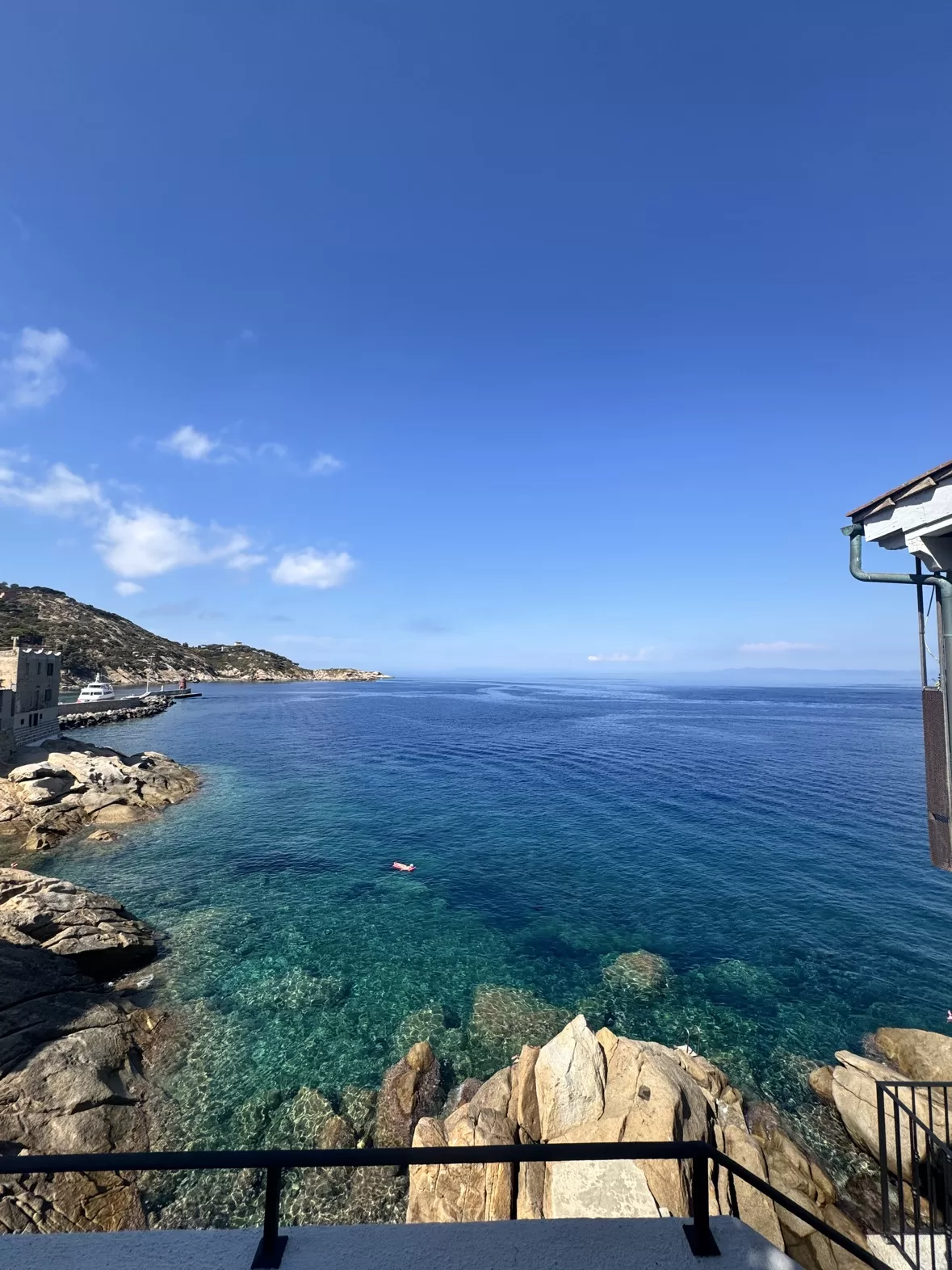
This fall, I came back from Italy with my family. It was our son's first big trip, and he did so well. More than anything, the trip reminded me of something I talk about with patients every week and don't always live myself: the value of slowing down.
We spent time in Greve in Chianti, in the heart of Tuscany's wine country, then on Isola del Giglio, a tiny island off the coast, and finished in Rome.
The three-hour dinnerNobody was in a hurry.
Here's what threw us off at first: Italians don't do dinner the way we do. Most people start eating late. Then you sit there for three hours. Nobody is checking the time. The first night, we kept looking around like, is something wrong?
No. This is simply how they do it. Three hours, talking the whole time, letting the evening unfold. The meal isn't something to get through on the way to the next thing. The meal is the evening.
I admired that more than I expected.

Dolce far niente.The sweetness of doing nothing
I loved that phrase, and it stayed with me. Because doing nothing is not really nothing. It's the part of the day where your body catches up with your life. It's where the good conversations happen, where your shoulders finally drop, where you remember you are a human being, not a human doing.
La dolce vita, the sweet life, isn't luxury or excess. It's the decision to take your time. And you don't need a plane ticket for it.
Why slowing down mattersYour body heals in "rest and digest."
When we rush, through meals, through conversations, through whole days, the body reads it as a low-grade emergency. That's your sympathetic nervous system, the "go" side: faster heart rate, shallower breathing, digestion put on hold. Useful in short bursts. Draining as a way of life.
Slowing down flips the switch to the other side, the parasympathetic or "rest and digest" system. That's where digestion, repair, and deep sleep happen. It's also where connection happens: it's very hard to truly listen to someone while your body thinks it's running late.
In Chinese medicine, the Lungs govern the breath and Qi, and every slow, full breath is a small way of tending them.
In modern terms, slow breathing (around five to six breaths a minute) is one of the most reliable ways to calm the nervous system. It raises heart rate variability, a marker of how well your body shifts out of stress mode.
GratitudeSaying thank you slows you down, too.
I think that's what moved me most about those long dinners. They weren't just slow. They were full of appreciation: for the food, the people at the table, the evening itself. Slowing down and gratitude go together. You can't really notice what you're thankful for while you're rushing past it.
Gratitude doesn't have to be a big feeling or a perfect journal. Research on simple practices, like writing down three good things at the end of the day, links them with better mood and better sleep. It works because it trains your attention toward what's already good, instead of scanning for the next problem.
And this time of year, gratitude has a built-in moment: the long table, the people you love, a meal worth lingering over. That's dolce far niente, Oakland-style.

The season of releaseFall asks us to let go.
In Chinese medicine, autumn is the season of the Metal element, and its organs are the Lungs and the Large Intestine: the organs of taking in and letting go. Its climate is dryness: dry air, dry skin, that scratchy throat that shows up every October. And right behind the dry air comes cold season, when the Lungs, considered the most delicate organ, need extra care.
The emotion of this season is grief, and its lesson is release. Nature is letting go of its leaves. We can take the cue. Letting go isn't losing. It's making room.
Five gentle waysEat for the season.
- Pears, especially Asian pears. The classic autumn fruit in Chinese food tradition. A poached pear with honey loves a dry throat.
- Honey. Warm water or tea with honey, the universal grandmother remedy for a scratchy throat.
- White foods. White is the Metal element's color: cauliflower, garlic, onions, mushrooms, white beans.
- Warm congee or broth. Savory rice porridge, chicken soup's Chinese cousin, for cold, dry air.
- Cooked greens and roots. Kale, chard, sweet potato, squash: grounding fall staples.
A little dolce far niente, right here at home.
- MorningStep outside and take ten slow breaths of the cool air. Fill your lungs completely, then let it all go.
- At dinnerPhones away. Stay at the table ten minutes longer than you normally would. Let the conversation wander.
- GratitudeBefore you eat, have everyone name one thing they're thankful for. Or write down three good things before bed.
- Let goChoose one thing that has been weighing on you this year, and decide to set it down.
I tell my patients to slow down all the time. Italy was my reminder that I need to hear it too. So this season, I'm taking my own advice: longer dinners, slower mornings, and a little more thank you.
With warmth and gratitude,
Dr. Emil Velasquez, DAOM, FABORM